

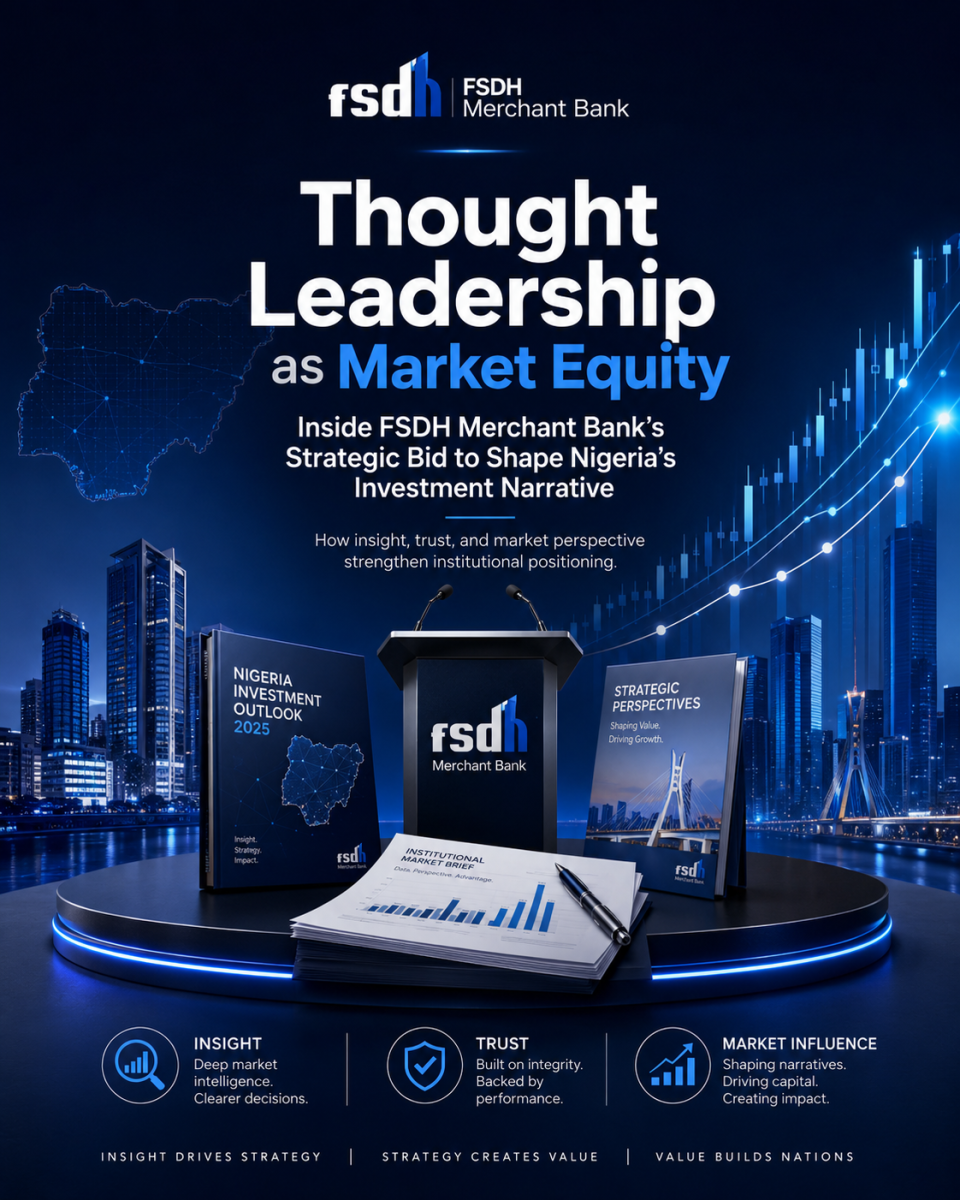
In the financial services ecosystem, corporate events are frequently relegated to the budget lines of simple public relations exercises. However, for institutional brands navigating volatile economic landscapes, hosting a high-stakes industry gathering is increasingly becoming a core B2B marketing strategy. A clear case study of this trend is the inaugural Investors’ Conference recently convened by FSDH Merchant Bank at the Lagos Continental Hotel.
Themed “Co-creating the Future of Intelligent Investing,” the event brought together key policymakers, regulatory bodies, and institutional investors to tackle the urgent challenge of capital formation in Nigeria. From a brand strategy standpoint, the conference represents a deliberate move by FSDH to shift its market perception from a standard financial intermediary to an authoritative ecosystem convener.
For merchant banks competing for premium institutional and high-net-worth portfolios, establishing thought leadership is a highly effective differentiation tool. By positioning itself at the center of the dialogue surrounding Nigeria’s investable future, FSDH is directly leveraging industry advocacy to build long-term corporate reputation.
The Marketing Mechanics of the Corporate Convener
To understand the Return on Marketing Investment (ROMI) for an event of this scale, one must look closely at the audience architecture. FSDH did not design this conference as a generic promotional vehicle for its retail or corporate products. Instead, the bank intentionally curated a high-level dialogue that forced key market participants into the same room.
By facilitating direct engagement between regulators and market operators, the bank effectively aligned its brand identity with systemic progress. In the B2B tech and banking sectors, this approach is known as relationship marketing at scale. It allows a brand to foster deep institutional trust by actively solving ecosystem bottlenecks rather than simply pitching financial products.
This strategic alignment was evident in the core discussions of the day, which moved beyond basic asset management to address structural reforms. Speakers emphasized that ensuring a sustainable investment environment requires a collaborative market design and forward-looking regulatory frameworks, a narrative that positions FSDH as a progressive partner to both the state and private enterprise.
Translating Policy Dialogue into Brand Trust
The speaker lineup further reinforced the bank’s reputational goals. With contributions from key industry figures, including virtual keynote insights from Emomotimi Agama, the event maintained a strictly analytical and authoritative tone. FSDH Managing Director and CEO Bukola Smith anchored the bank’s perspective, focusing on the critical need for regulatory coherence and the mobilization of domestic capital, particularly pension funds, to drive long-term national growth.
From a corporate positioning perspective, backing these macro-economic arguments allows FSDH to build significant brand equity among institutional investors. When a bank publicly champions the productive deployment of local capital, it communicates operational maturity and a deep understanding of market realities.
This concrete focus on structural solutions provides the independent validation that standard corporate advertising often lacks. The message to the market is clear: FSDH is not merely reacting to the current economic environment, but is actively helping to shape the regulatory scaffolding that will govern it.